Showing posts with label walter benjamin. Show all posts

Thursday, January 03, 2008

interstice


Pictures of Shanghai

“From this moment she was convinced she was in the grip of a terrible nightmare, only there was no waking from this one: no, she was quite certain that it was reality, only more so; furthermore she realized that the chilling events in which she had been participant or to which she had been witness (the appearance of the phantasmagorical vehicle, the violence in Erdélyi Sándor Road, the lights going off with all the precision of an explosive device, the inhuman rabble in the station forecourt, and above all this, dominating everything, the cold unremitting stare of the figure in the broadcloth coat) were not merely the oppressive creation of her ever-troubled imagination, but part of a scheme so co-ordinated, so precise, that there could be no doubt of their purpose.” The Melancholy of Resistance, Lászlo Krasznahorkai

“The crowd is the veil through which the familiar city beckons to the flâneur as phantasmagoria-now a landscape, now a room.” –Walter Benjamin

“Every epoch, in fact, not only dreams the one to follow but, in dreaming, precipitates its awakening. It bears the end within itself and unfolds it- as Hegel already noticed-by cunning.” –Walter Benjamin Paris, The Capital of the Nineteenth Century

Friday, August 24, 2007

axenic


"Every reader, as he reads, is actually a reader of himself. The writer's work is only a kind of optical instrument he provides the reader so he can discern what he might never have seen in himself without this book. The reader's recognition in himself of what the book says is the proof of the book's truth." -Marcel Proust

I read, I read incessantly. I read partially to escape this world which brutalizes me, but I also read to glean clues and insights about this place I am forced to inhabit. I read to gain comprehension. I am often horrified by the people of this world and their behaviour, yet I am flooded with insatiable curiosity to peer into their motives. Yes, I attempt to construct a world in texts parallel to the world I see outside my window. I want my mind to be re-ordered, yet the words intact.

Contrarily though, I wonder if all this reading puts me out of sync with the rest of humanity? Reading alters time; I wander the passages of someone else's thoughts and mental departures.

"Artists' fame is the most monstrous of all, for it implies the idea of immortality. Every novel created with real passion aspires quite naturally to a lasting aesthetic value. This is the novelist's curse: his honesty is bound to the vile stake of his megalomania." -Milan Kudera

Tuesday, January 23, 2007

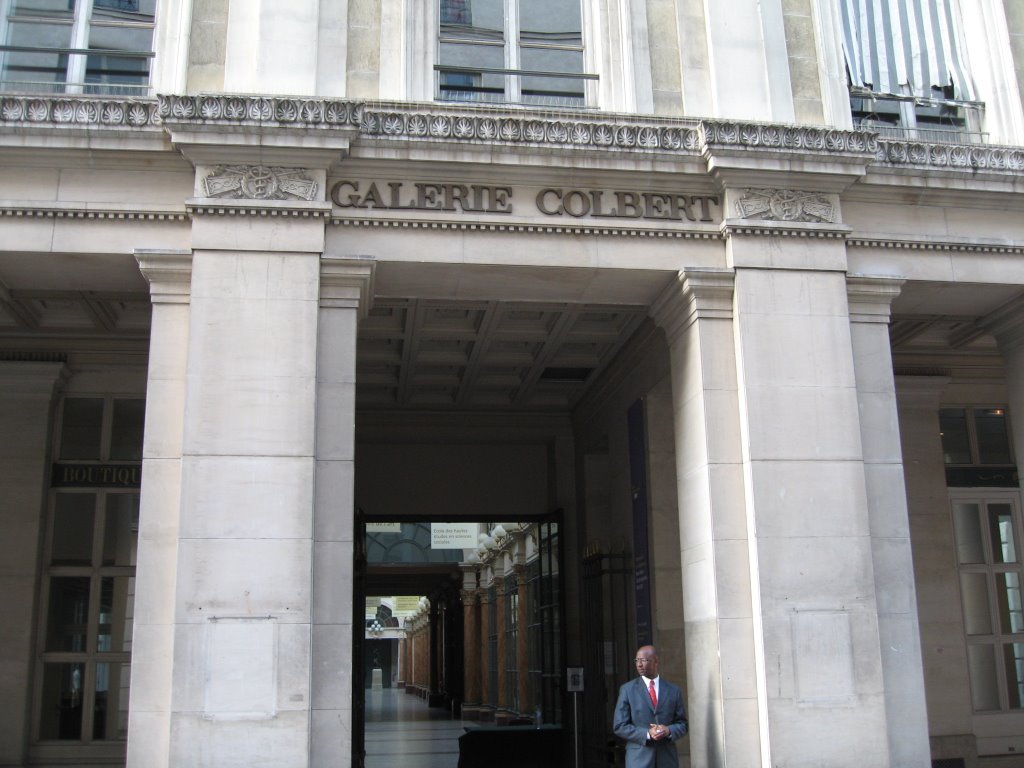
colbert


The Arcades Project Walter Benjamin

Phantasmagoria is the intentional correlate of immediate experience. M3a, 4

Experience is the outcome of work; immediate experience is the phantasmagoria of the idler. M1a,3


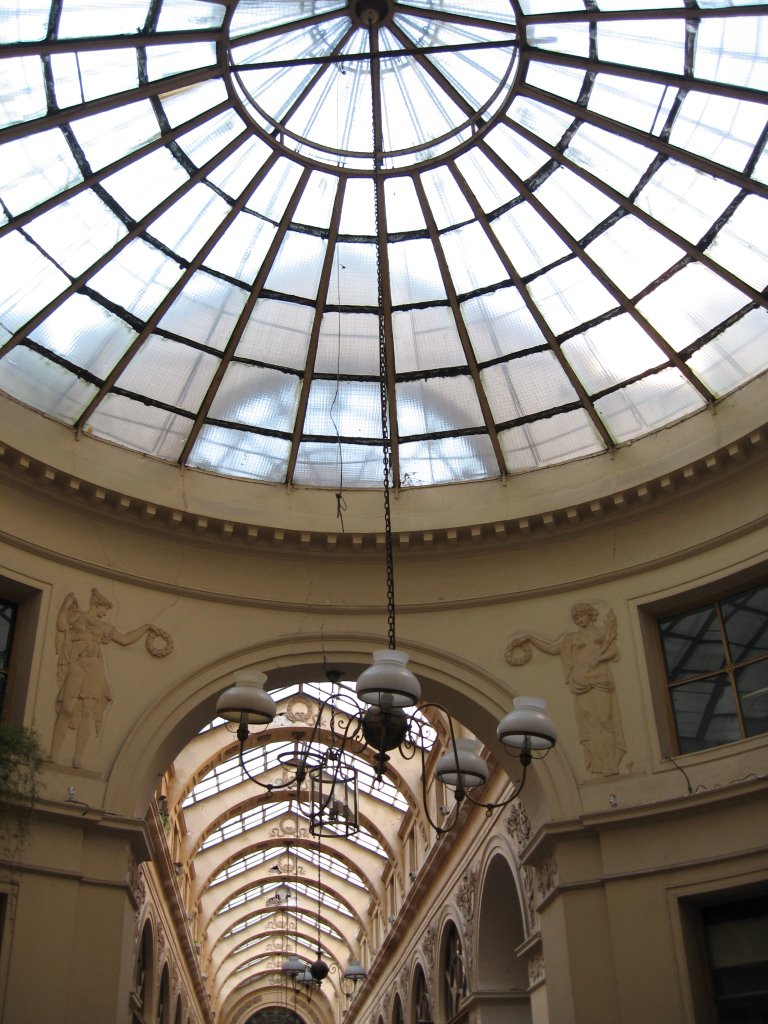
If you would like more pictures of passages: http://www.santm.com/gallery2/main.php?g2_itemId=7380&g2_page=2

and more: http://www.parisbestlodge.com/passages.html

and a little more:
http://paris.contexttravel.com/static/passages.php?sess=ct&PHPSESSID=15a34471cda15533ae8fda95efd

Friday, January 19, 2007

choiseul


The Arcades Project Walter Benjamin


Boredom began to be experienced in epidemic proportions during the 1840's. Lamartine is said to be the first to have given expression to the malady. It plays a role in a little story about the famous comic Deburau. A distinguished Paris neurologist was consulted one day by a patient whom he had not seen before. The patient complained of the typical illness of the times: weariness of life, deep depressions, boredom. "There's nothing wrong with you," said the doctor after a thorough examination. "Just try to relax-find something to entertain you. Go see Deburau some evening and life will look different to you." "Ah, dear sir," answered the patient, "I am Dedrau." D3a, 4

Thursday, January 18, 2007

vivienne


The Arcades Project Walter Benjamin

The father of Surrealism was Dada; its mother was an arcade. Dada, when the two first met, was already old. At the end of 1919, Aragon and Breton, out of antipathy to Montparnasse and Montmarte, transferred the site of their meeting with friends to a café in the Passage de l'Opéra. Construction of the Boulevard Haussman brought about the demise of the Passage de l'Opéra. Louis Aragon devoted 135 pages to this arcade; in the sum of three digits rides the number nine- the number of muses who bestowed their gifts on the newborn Surrealism. C1, 3

Wednesday, January 17, 2007

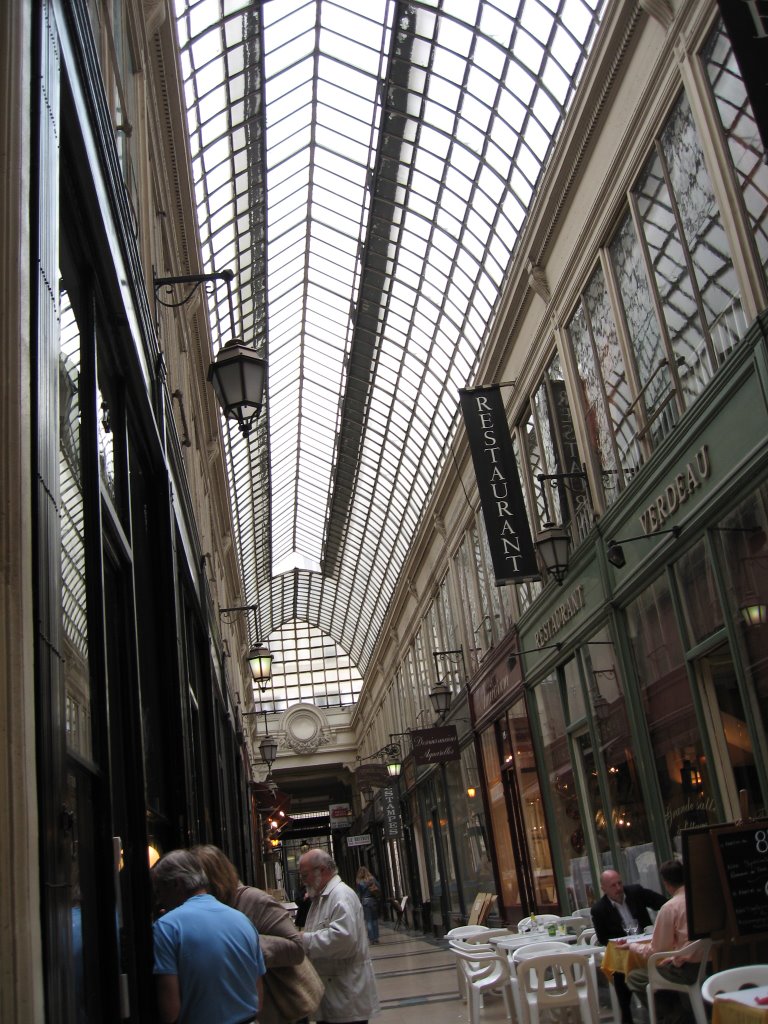
verdeau


The Arcades Project Walter Benjamin

Arcades are houses or passages having no outside-like the dream. L1a, 1

The street conducts the flâneur into a vanished time. For him, every street is precipitous. It leads downward--if not to the mythical mothers, then into a past that can be all the more spellbinding because it is not his own, not private. Nevertheless, it always remains the time of a childhood. But why that of the life he has lived? In the asphalt over which he passes, his steps awaken a surprising resonance. The gaslight that streams down on the paving stones throws an equivocal light on this double ground. M1, 2

Tuesday, January 16, 2007

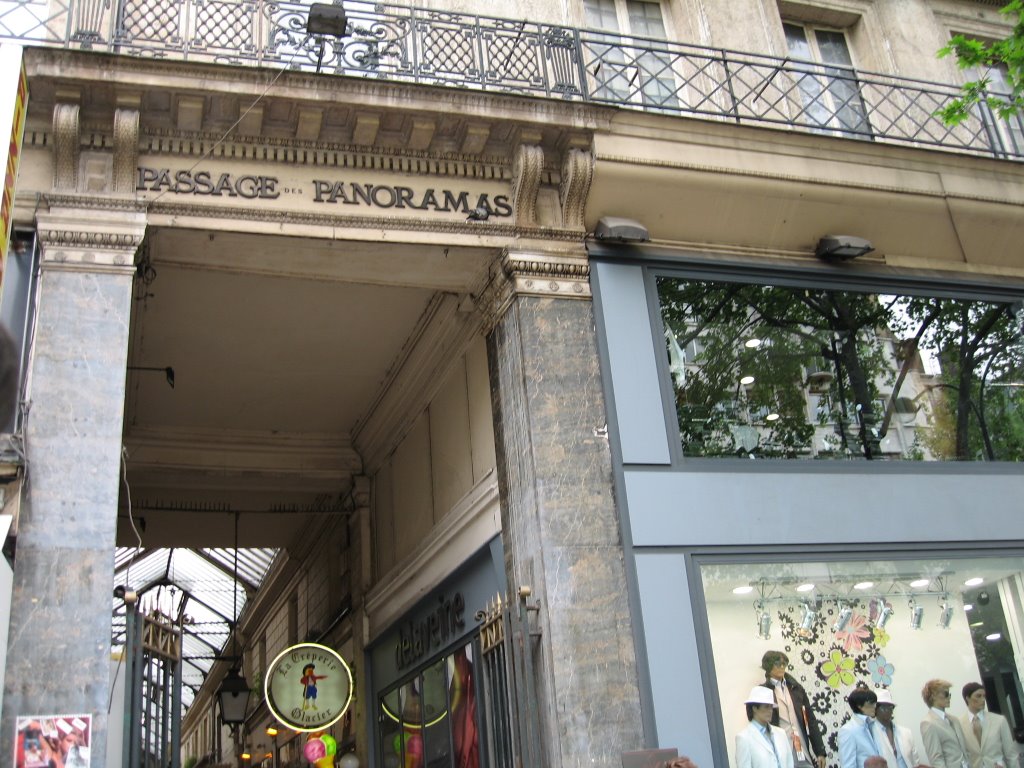
panoramas


From The Arcades Project Walter Benjamin

The interest if the panorama is in seeing the true city- the city indoors. What stands within the windowless house is the true. Morever, the arcade, too, is a windowless house. The windows that look down on it are like loges from which one gazes into its interior, but one cannot see out these windows to anything outside. (what is true has no windows; nowhere does the true look out to the universe.) Q2a, 7