Thursday, October 04, 2007

synchronicity and blood


The first photo from this photographer- (how I feel sometimes)
http://www.chantalmichel.ch/fotografie/index.html


In the past week I had two dreams of blood. One of the dreams I had cut myself and felt the blood run down my hand. The sight of the blood made my stomach knot up so tightly that it woke me up and I felt nauseous. The next day at work, I had two bloody noses.
The other dream I had: a basin that was overflowing with blood.

I remember reading about the connection to blood and perfume; it was in a book titled, Scent, by Annick Le Guérer: "the power of perfume have centered upon its similarity to magical potions, its association with the mythologies of vital fluids such as sap and blood". There is a whole chapter on Blood, Incense and Ritual.

I looked for a blood in contemporary perfumes, the closest thing I found was with blood orange: Maitre Parfumeur et Gantier Sanguine Muskissime, reviewed here.

Sanguine is one of the four humors that relate to blood. The other three are: Choleric, Melancholic, and Phlegmatic.

The Sanguine temperament, according to Wiki:

Sanguine indicates the personality of an individual with the temperament of blood, the season of spring (wet and hot), and the element of air. A person who is sanguine is generally optimistic, cheerful, confident, popular, and fun-loving. He/She can be day dreamy and off-task to the point of not accomplishing anything and can be impulsive, possibly acting on whims in an unpredictable fashion. Sanguines usually have a lot of energy, but have a problem finding a way to direct the energy. This also describes the manic phase of a bipolar disorder.


I'm more of a Choleric type, myself.

Some history of the blood orange:

"The Blood, Moro, or Maltese Oranges are very old orange varieties. There is some historical evidence that the blood orange hybrid first appeared in Southern Europe around 1850 and was then brought to North America many decades later by Spanish and Italian immigrants. Commonly know throughout most of the world as "blood," "blood-red" or "blush" oranges, they have a number of other common or regional names."


Last week, within one hour I read two reviews of the same book, not intentionally. One in the New Yorker, the other in Raintaxi (which does not have it available online).
In Her Absence
by Antonio Muñoz Molina, translated from the Spanish by Esther Allen (Other Press)

Mario believes that his wife, Blanca, has disappeared and been replaced by an impostor who is almost identical, only more sensual and tender. Thus begins the story of an unlikely marriage. Mario, guided by the lessons of his working-class origins, values “almost nothing in life more than stability.” But Blanca, privileged and with an “innate” sense of entitlement, has come to feel that their life is one “from which great experiences were absent.” Mario is infatuated with Blanca; Blanca is infatuated with art. As her interest shifts from one trendy artist to another, Mario strives to keep pace. Muñoz Molina layers a subtle satire of artistic hypocrisy with a stirring account of class separation. Mario is entranced by his wife’s “aura of uncertainty” but cannot escape his own self-annihilating caution. “Penury,” he reflects, “makes people fearful and conformist.”


Monday, October 01, 2007

dangerous blonde sunday


Sunday, I spent nearly the whole day in bed reading the biography of Caroline Blackwood (Dangerous Muse: The Life of Lady Caroline Blackwood by Nancy Schoenberger). Blackwood was born in London in 1931, grew up in Ireland and lived sporadically in America until her death in1996. She is famous for her beauty, her eccentricity, her writings and her husbands (the painter, Lucian Freud and the poet, Robert Lowell). What struck me about her was her slovenliness, her alcoholism and her morbidity. Nevertheless, it makes for a magnetic read. I wondered if she had not been beautiful and titled, would she have become a writer and would she have even been famous at all? I am quite enchanted by muses, how little they are acknowledged and valued and the creatively inspired havoc they can unleash on their lovers/artists.

I came across this book while browsing the late Theresa Duncan's blog; she quotes in her post, a little from this review of the biography. I was immediately intrigued and went out to check out the book from my library. The pictures above are: Lucian Freud's portrait of Lady Blackwood and the cover of the book, which is a photo taken by Walker Evans.

Here is an excerpt of an article written about Lowell and his last minutes of life- it gives insight into the ill-fated marriage between Lowell and Blackwood:

On this day [September 12] in 1977 the poet Robert Lowell died at the age of sixty in the back seat of a New York City taxi. He had hailed the cab at JFK airport and was heading up to West 67th Street, returning to his ex-wife, the writer Elizabeth Hardwick. He had just flown back from a disastrous trip to Ireland, where he had gone to explain to his present wife, the Anglo-Irish Lady Caroline Blackwood -- like Hardwick a writer, as well as heiress to the Guinness Stout fortune -- why their marriage was over. The meeting at Blackwood's estate outside Dublin had of course ended badly, with Blackwood storming out with her three children -- the son she had had with Lowell and two daughters from two former marriages, one to the painter, Lucien Freud (grandson of Sigmund Freud), one to the composer, Israel Citcowitz. At the end, Lowell still clutched in his stiffening arms one of Lucien Freud's paintings of the young Blackwood, staring out from the canvas into the void.

Wednesday, September 26, 2007

California Floristic


Something I was thinking about while riding BART to work: California plant communities. This may be a strange thing to be thinking about at 8am, but I used to be, and still am, a bit of a botany nerd. I've taken some botanical trips to some `interesting plant areas of CA; two of the more notable areas I have visited are the White Mountains and the Siskiyou Mountains. The oldest living trees, Pinus longaeva inhabit the White Mts., and in the Siskiyou Mts., there exists, alongside California conifers, other conifers that usually inhabit farther north, Alaska and Northern Canada.

California is a biodiversity hotspot, meaning that a high number of native or endemic plants are found here. Where I live, Oakland, the plant community is considered Coastal Sage Scrub. But you can find very little evidence of this now. Depending on what system you use, Munz, Ornduff, Jepson and etc., there are up to 30 plant communities; some even argue that each city, town or even hillside is its own plant community, although I find that a little extreme.
There must have been something in the air for me to ponder California plant life, for when I arrived at work, I saw this headline: New Plant and Animal Species Discovered in Vietnam
There's always great hope when we discover new things in this world.
on the pictures: 1. Coastal Sage Scrub- the Santa Cruz coast (July 2003)
2. a conifer in the Siskiyou wilderness
3. A scene of the White Mts.

Friday, September 21, 2007

Iris


Imagination loved to wander the streets. The sun delighted her and the sounds of conversation, cars driving, and footsteps would make her smile. The wind would come up and blow her dusty, copper-burnt hair into a halo around her wide-open pale, green eyes. She would let her nose take direction, and she would joyously pursue the smell of daphne, stomping through front yards until she happily located the scented culprit. Those were the days when we held each other’s hand.


Life gets hard. Challenges can nose their way into the sunscented happiness. It was hard for me to let go of her hand, I had to once in awhile. But I always wanted to take her hand again.


Oh, what a petulant one she is. I always hope she would understand and not stay angry for long. My moods are my moods; I cope by navigating into architectures of withdrawal. It is a complex building with rooms going into more rooms. I never felt lonely as long as I knew that she was out there.


Some of places on the street I cannot go back to, they are haunted for me. I never felt comfortable brushing up against the traces of my memory. Imagination could spin those memories into something else. She could re-call the story that would erase my regret. She was always my best friend. I whispered all my grieved secrets to her while we slept. Her hair intertwined with my hair, there was no boundary between her skin and mine. Our limbs flung onto the other. So of course I began to miss her when she was gone.


"Free of disappointment and tedium, the days went by blissfully. In the mornings, we would wake up happy, joyful at being together; each day presented us with a vast, unknown world of surprises. Familiar things ceased to be familiar, recovering their newness, while other things, like park and lakes, became inviting and maternal. We went around the streets noticing things other people didn't see. Aromas, colors, light, time, and space were more intense for us. As if under the effects of a powerful drug, our sense of perception had grown more acute. But we weren't drunk, just perceptive and calm, endowed with an unusual capacity to be in harmony with the world." - Cristina Peri Rossi Full Stop

Wednesday, September 19, 2007

season of hoaxes


Why do we fall for hoaxes? Some hoaxes seem too absurd to believe, and yet people believe. Is it the impossibility that we fall for? Perhaps in this life of much-desired security that some event, so improbable enchants us. And perhaps, in this pre-ordained world, that something can escape and exist outside of all expectation? Yet, when the hoax is discovered, oh the wrath. Nevertheless, no one seems to learn from it, and one waits to fall for the next hoax. Below the story of the word that never was, the wine mixer that never existed, the pianist that never played and the story that was never written.


Turn to page 1,850 of the 1975 edition of the New Columbia Encyclopedia and you’ll find an entry for Lillian Virginia Mountweazel, a fountain designer turned photographer who was celebrated for a collection of photographs of rural American mailboxes titled “Flags Up!” Mountweazel, the encyclopedia indicates, was born in Bangs, Ohio, in 1942, only to die “at 31 in an explosion while on assignment for Combustibles magazine.”

If Mountweazel is not a household name, even in fountain-designing or mailbox-photography circles, that is because she never existed."


If indeed Parker’s hundred-point 1921 Pétrus was a fake, such hubris might not be misplaced. Could Rodenstock have become so proficient at making fake wine that his fakes tasted as good as, or even better than, the real thing? When I asked Parker about the bottle, he hastened to say that even the best wine critics are fallible. Yet he reiterated that the bottle was spectacular. “If that was a fake, he should be a mixer,” Parker said. “It was wonderful.”


Fundamental to the burgeoning interest in Hatto was awe that she could be so tirelessly productive during what should have been her retirement. Her exploits seemed even more remarkable after Richard Dyer, then the chief music critic of the Boston Globe, interviewed her in the summer of 2005 and wrote an article that began, “Joyce Hatto must be the greatest living pianist that almost no one has ever heard of.” The next paragraph contained a surprising revelation: “Hatto, now 76, has not played in public in more than 25 years because of an ongoing battle with cancer. She was once told that it is ‘impolite to look ill,’ and after a critic commented adversely on her appearance, she resolved to stop playing concerts.”


The most fascinating aspect of hoaxes is the extent to which they tend to escape the control of their creators, absorbing new accomplices along the way. As McHale observed in a recent interview, literary hoaxes are ''cut loose from their source, or outright lie about it, and so float free, in a certain sense, so that they can be reclaimed further down the line and used for all sorts of unintended purposes."

Monday, September 17, 2007

424


"Every day things happen in the world that can't be explained by any law of things we know. Every day they're mentioned and forgotten, and the same mystery that brought them takes them away, transforming their secret into oblivion. Such is the law by which things that can't be explained must be forgotten. The visible world goes on as usual in the broad daylight. Otherness watches us from the shadows." - Fernando Pessoa

Friday, September 14, 2007

gioconda


Stolen pictures: top-http://punctum.typepad.com/photos/gold_leaf_photos/index.html
bottom- from W Magazine October 2007
Photographed by Mert Alas & Marcus Piggott


My imagination has left me. She left neither a note nor a forwarding address. One day she said, "I'm going out for a walk", then under her breathe she muttered, "and I'm never coming back." I did not believe her then, she is often petulant. When she was gone for a while, I thought she was hiding among the books by my bed. But she could not be found.

I know why she has left, She felt unappreciated, under-utilized, abandoned. I changed. I no longer lingered in dreamy dialogue with her. I was too immersed in history and science. I wanted answers, I stopped drifting along the avenues of possibilities. I was tired of all the things that could be. History steals sleep from the reader, dreams become truncated, filled with events. Imagination always wants room to spread about, leave her socks on the floor and mess up the bedcovers. I found myself always picking up after her, then resentment started to invade. It beings with cutting words then turns into pricked sideways glares followed by unsuppressed blown raspberries . No wonder she left.

No one wants to be forgotten, as though you never existed.

I thought I caught glimpse of her among the trees, but she dissolved into smoke. And the leaves fluttered helplessly with laughter around my head. I did not run after the apparition, I'm too tired.

"One falls in love with certain places restlessly associated with the beloved and strolls among them, alone but intimately accompanied." - Cristina Peri Rossi Mona Lisa

Wednesday, September 12, 2007

useless efforts


Pictures stolen from this website: http://www.zymoglyphic.org/galleries.html
Amazing stuff!


"Some of the useless efforts are beautiful, others somber. We don't always agree about their classification.

There are men who have taken long journeys in pursuit of inexistent places, unrecoverable memories, deceased women, disappeared friends. There are children who undertook impossible tasks with great resolve.

Entire sections of the museum are dedicated to voyages. We reconstruct them from the pages of the books. After a time of drifting across various seas, traversing dense forests, discovering cities and marketplaces, crossing bridges, sleeping on trains and station benches, the travelers forget the purpose of the trip yet nevertheless continue traveling. And then one day- lost in a flood, trapped in the subway, asleep forever in a doorway- they disappear without a trace. And no one comes to claim them."

The Museum of Useless Efforts -Crista Peri Rossi

Wednesday, September 05, 2007

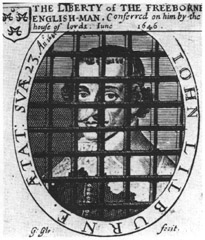
John Lilburne


Who's that writing? John the agitator

"If only John Lilburne were left in the world, then John would quarrel with Lilburne and Lilburne with John" Henry Marten

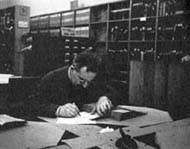
picture 1 is from this website- a Libertarian who travels the world giving lectures- I'm not a Libertarian, but he does have nice pictures on his website-


From Wikipedia:

John Lilburne (1614?–August 29, 1657 England), also known as Freeborn John.

John Lilburne began in earnest his campaign of agitation for freeborn rights, the rights that all Englishmen are born with, which are different from privileges bestowed by a monarch or a government.

John Lilburne was arrested upon information by an informer acting for The Stationers' Company and brought before the Court of Star Chamber. Instead of being charged with an offense he was asked how he pleaded. John Lilburne demanded to be presented in English with the charges brought against him (much of the written legal work of the time was in Latin). The Court refused Lilburne's request. The court then threw him in prison and again brought him back to court and demanded a plea. Again John Lilburne demanded to know the charges brought against him.

The authorities then resorted to flogging him with a three-thonged whip on his bare back, as he was dragged by his hands tied to the rear of an ox cart from Fleet Prison to the pillory at Westminster. He was then forced to stoop in the pillory where he still managed to campaign against his censors, while distributing more unlicensed literature to the crowds. He was then gagged. Finally he was thrown in prison. He was taken back to the court and again imprisoned.

This began the first in a long series of trials that lasted throughout his life for what John Lilburne called his "freeborn rights". As a result of these trials a growing number of supporters began to call him "Freeborn John" and they even struck a medal in his honor to that effect. It is this trial that has been cited by constitutional jurists and scholars in the United States of America as being one of the historical foundations of the Fifth Amendment to the United States Constitution. It is also cited within the 1966 majority opinion of Miranda v. Arizona by the U.S. Supreme Court.


On the other side, perhaps related, an apartment that costs 45 million dollars? Not even a house, but an apartment in a 201 unit apartment building in New York City-absurd. From the New Yorker

A building like this leaves you two choices: you can resist it or you can yield to it. On one level, there’s something unsettling about the whole thing—is costume-drama luxury the best that our new century has to offer? And what are we to make of the feeding frenzy surrounding it, in an already hypertrophied real-estate market?

Wednesday, August 29, 2007

Bell Wheel- Museum of Jurassic Technology

Locus Solus- Jurassic Technology


Picture 1 from: http://pdphoto.org/
The Museum of Jurassic Technology.

picture 2 from Tom Kidd's art website:http://spellcaster.com/tomkidd/index.htm

The surrealists call Roussel the "Proust of dreams" and after reading this heavily detailed novel of his, I can concur. We meet the main, and one of the only characters of this strange novel, Martial Canterel, on a tour of his estate. The reader is part of an unnamed group who views enigmatic scenes. The scenes are vividly described to the reader. After viewing the insensible scenes, Canterel then elucidates what has been shown.

Locus Solus, by Raymond Roussel, has no real plot except for this. There are no characters except for Canterel and some minor characters named, but never fleshed out. There are stories within the stories which build up the novel. We (and the character that represents us) are always outside. There are those who are convinced that clues are strewn within Roussel's works, and by some key, a mystery can be solved. Reading Locus Solus, one might be tempted to take this view in consideration to make sense of it. Perhaps.

While reading Locus Solus, I had deja vu, a sense of slippage. In December 2006, I took my first and only trip to L.A. A friend highly recommended a place to visit, this was confirmed by some guide books that I consulted. So on our first full day in L.A., I organized our day. First we were to stop at the Museum of Jurassic Technology. Of course, we arrived too early and went to visit some avantgarde architecture which is also in Culver City.

A little after 10AM, we arrived at the nondescript storefront that is the entrance of the museum. We spent a half-hour in the entrance were bookstore is to be found just looking at all the fascniating books. We wandered through this strange and hypnotizing place. I was particularly entranced by the bell-wheel, which I heard tinkling as soon as I entered the museum. I tracked it down by listening, ever curious by the falling sound. I finally found it inthe dark Athanasius Kircher exhibit. Later, around 1Pm, I think, we were allowed upstairs to have tea and cookies. We looked at the Cat's Cradle exhibit along with another, which I cannot remember.

Reading the narrator's tour in Locus Solus reminded me of this visit. We wander undecipherable scenes with little clues to understand what we are seeing or how we are to interpret such scenes. Of course, at the museum's bookstore I purchased Lawrence Weschler's book to try to grasp more meaning. I am not the only one to make this connection.

Tuesday, August 28, 2007

kypros


Kypros is an ancient Greek perfume mentioned by Theophrastus . It contained cardamon and a sweet-scented material called aspalathus which had first been steeped in sweet wine. It is used by men and was used to counter lassitude. -Nigel Groom, The New Perfume Handbook


It is times like these that I feel my thoughts are pressed like leaves between pages of the texts I read.

Friday, August 24, 2007

axenic


"Every reader, as he reads, is actually a reader of himself. The writer's work is only a kind of optical instrument he provides the reader so he can discern what he might never have seen in himself without this book. The reader's recognition in himself of what the book says is the proof of the book's truth." -Marcel Proust

I read, I read incessantly. I read partially to escape this world which brutalizes me, but I also read to glean clues and insights about this place I am forced to inhabit. I read to gain comprehension. I am often horrified by the people of this world and their behaviour, yet I am flooded with insatiable curiosity to peer into their motives. Yes, I attempt to construct a world in texts parallel to the world I see outside my window. I want my mind to be re-ordered, yet the words intact.

Contrarily though, I wonder if all this reading puts me out of sync with the rest of humanity? Reading alters time; I wander the passages of someone else's thoughts and mental departures.

"Artists' fame is the most monstrous of all, for it implies the idea of immortality. Every novel created with real passion aspires quite naturally to a lasting aesthetic value. This is the novelist's curse: his honesty is bound to the vile stake of his megalomania." -Milan Kudera

Tuesday, August 21, 2007

scent of Vienna?


More stolen pictures: 1. Ernst Haas- Photographer, born in Vienna 1921
2. A photo by Ernst Haas- and yes, that is Marilyn Monroe, from Arthur Miller's The Misfits, 1960


More thoughts on Vienna, I was imagining, what would a perfume inspired by Vienna smell like?

Like Diorella?

"Start with the obvious: Diorella is a profoundly strange perfume. A Frenchman I said this to became very defensive and replied, ''Diorella is a classic!'' Which was not only irrelevant -- it also missed the point entirely. Can you describe Diorella? People say, ''Intensely flowery''; they say, ''Fresh yet weightless''; they say, ''Notes of citrus and ripe fruit'' and blah-blah-blah. O.K., fine. All of this is wrong: what is wonderful about Diorella is that it smells like a new fur coat that has been rubbed with a very creamy mint toothpaste. Not gel. Paste. It is a great, great fragrance. It was created for Dior by the legendary perfumer Edmond Roudnitska in 1972, and it feels like 1932 and 2022 at the same time."


No- Maybe more like Nombre Noir:

"The flower at the core of Nombre Noir was half-way between a rose and a violet, but without a trace of the sweetness of either, set instead against an austere, almost saintly back-ground of cigar-box cedar notes. At the same time, it wasn't dry, and seemed to be glistening with a liquid freshness that made its deep colors glow like a stained-glass window."
-Luca Turin


This scent would follow the end song of the plays and stories of Arthur Schnitzler- Wiener Moderne writer.

"Schnitzler's final stories are, inevitably, elegies for a vanished world. It is surely significant that several of them end in suicide, as if the self-destruction of individuals embodied the disaster of a whole society rushing into oblivion. In the novella "Night Games," a young officer, Lieutenant Wilhelm Kasda—precisely the sort of person Schnitzler would once have satirized—is ruined in a game of baccarat. He has a day to raise the money or his honor as an officer will be lost and suicide his only option. Few writers could hope to equal the intensity with which Schnitzler imagines Kasda's desperation as he begs for money, first from a rich uncle and then from a woman he slept with once and then neglected. When the suicide comes, however, the narration switches to a tragicomic mode that is almost Chekhovian. The uncle, arriving too late with the money, cuts a painfully foolish figure beside the corpse."


Friday, August 17, 2007

debouch


Stolen pictures- left side- from this website: http://capacioglu.stumbleupon.com/

the right, Hiroshi Sugimoto, from this site- http://www.kultureflash.net/archive/68/.

Sugimoto is currently being exhibited at the De Young Museum in San Francisco, I saw the exhibit, it covers the variety of his photos; from the minimalism (as shown in this photo) to his faux-figuratives.


Today's obsessions:


What would ancient perfume smell like? "Extracts of anise, pine, coriander, bergamot, almond, and parsley "


Joseph Conrad:


"To survey with wonder the changes of one's own self is a fascinating pursuit for idle hours. The field is so wide, the surprises so varied,the subject so full of unprofitable but curious hints as to the work of unseen forces, that one does not weary easily of it. I am not speaking here of megalomaniacs who rest uneasy under the crown of their unbounded conceit--who really never rest in this world, and when out of it goon fretting and fuming on the straitened circumstances of their last habitation, where all men must lie in obscure equality. Neither am I thinking of those ambitious minds who, always looking forward to some aim of aggrandizement, can spare no time for a detached, impersonal glance upon them selves"


The Estonian language:


"The majority of European languages belong to the Indo-European language group (e.g. Spanish, Polish, Lithuanian, Norwegian, Albanian, Romany, Greek or Welsh). Of the ancient European languages, once so widespread throughout the continent, Basque in the Pyrenees, the Finno-Ugric languages in the North and Central Europe, and Caucasian languages (e.g. Georgian) in the southeastern corner of Europe have managed to survive.

The Estonian language belongs to the Finnic branch of Finno-Ugric group of languages. It is not therefore related to the neighbouring Indo-European languages such as Russian, Latvian and Swedish. Finnish, Hungarian and Estonian are the best known of the Finno-Ugric languages; rather less known are the following smaller languages of the same language group: South Estonian, Votic, Livonian, Ingrian, Veps, Karelian, Sami, Erzya, Moksha, Mari, Udmurt and Komi, spoken from Scandinavia to Siberia. The relations between languages can often be seen from the similarities in numeric systems:


Estonian differs from its closest large related language, Finnish, at least as much as English differs from Frisian. The difference between Estonian and Hungarian is about as significant as between German and Persian.

Along with Icelandic, Estonian is at present one of the smallest languages in the world that fulfils all the functions necessary for an independent state to 'perform' linguistically. Teaching, at both primary school and university level, is in Estonian; it is also the language of modern science (molecular biology, astronomy, computer science, semiotics, etc.). Estonian is used in the army, in the theatre, aviation, journalism - in all walks of life. Estonian is the only official language in Estonia in local government and state institutions.


Estonian is spoken by approximately 1 100 000 people throughout the world. About 950 000 of them live in Estonia, and more than 150 000 are scattered over Sweden, Canada, USA, Russia, Australia, Finland, Germany and other countries. The first attempts to describe the Estonian language scientifically were undertaken in the early 17th century. In 1803, a lectureship of the Estonian language was established at what was then the German-language University of Tartu, founded in 1632. With the spread of the ideas of Enlightenment, the interest of the Baltic German Estophiles in the local language and culture increased. During the 19th century, the first educated Estonians began publishing scholarly research of their mother tongue. The first doctor of the Finno-Ugric languages of Estonian origin was Mihkel Veske who did research into the history of the Estonian language in the 1870s; the Estonian Writers' Union, established in 1871, undertook the task of standardising the common language. "


Tuesday, August 14, 2007

Hunger

I read it with relish, I started on Sunday and finished this morning (Tues.) on BART, on my way to work. I felt uncomfortable reading it while having breakfast. I felt deranged while reading it at a full cafe in Berkeley on a Monday afternoon. I walked by two or more cafes, filled with Berkeley students studying diligently for the summer semester. When I finished the book, I wondered if all my readings of such depraved characters were going to drive me to lunacy. I guess we will find out, since I do not see myself eliminating such literature from my reading list any time soon.

Here's one excerpt I found when I randomly opened the book, it is tame, comparatively.

"Not a sound came to disturb me-the soft dark had hidden the whole world from me, and buried me in a wonderful peace- only the desolate voice of stillness sounded monotonously in my ear. And the dark monsters out there wanted to pull me to themselves as soon as night came, and they wanted to take me far far over seas and through strange lands where no human being lives. " -Hunger Knut Hamsun

Here's a New Yorker article on Hamsun from December 2005:

"...Isaac Bashevis Singer argued that "the whole modern school of fiction in the twentieth century stems from Hamsun, just as Russian literature in the nineteenth century ‘came out of Gogol’s greatcoat.’ ” In Scandinavia, though, Hamsun meant trouble. During those months in Copenhagen, I occasionally walked into one of the antiquarian bookstores that could be found all over the city’s Latin Quarter. Several times when I asked about Hamsun’s works, the man behind the counter (it was always a man) would shake his head and declare, “He was a traitor!” I’d try to remember the shop so as not to embarrass myself again."

Wednesday, August 08, 2007

ghastly, indeed


More clues about Europe before the World Wars, about the maps above: 1. Europe roughly after the Congress of Vienna 2. The corresponding language groups. From this website.

Congress of Vienna, on October 2, 1814


"What struck them first was the light. Sixteen thousand candles and thirty-two chandeliers lit up two ballrooms in the imperial palace, where the glass windowpanes had been replaced with mirrors, redoubling the splendor.

Geographically, the problem at Vienna was roughly the same as the one facing the Allies at Potsdam in 1945. Russia, which bore the brunt of the war against Napoleon, had marched its armies across Europe and was now effectively in control of Poland and much of Prussia. Alexander, who had a messianic dream of restoring Poland to the map as a kingdom under his control, refused to give back the parts of Poland that had formerly belonged to Prussia. As a result, Prussia sought compensation to the west, demanding to annex the independent kingdom of Saxony. Austria, meanwhile, under the wily conservative Metternich, hoped to maintain a balance of power, to rein in Alexander's ambitions, and to keep Prussia from dominating the smaller German states. It was a thoroughly unedifying spectacle, in which the great powers swapped cities and provinces like horse-traders, while the claims of small nations were ruthlessly ignored."


"Indeed, the Walser tone, hovering between beatific quietism and a burlesque of conventionality, is detectable in the immortal reply he gave a man who visited him at an asylum and asked about his writing: 'I am not here to write, but to be mad.'"


"Nancy Cunard paid a high price for her nonconformity. She was disinherited, arrested, beaten, institutionalized and eventually declared insane. Her legacy includes her refusal to regret, or attempt to explain, any of it.

Cunard was like "some invention, ghastly or not, of her own.... She didn't fit anywhere." That inconsistency or "passionate inconstancy," as William Carlos Williams called it, consisted of, as one male friend described it, "baffling contradictions"--she was passionate but unromantic, loyal but unforgiving, unconventional but fastidious, emotional but unsentimental, hedonistic but anorexic. Huxley summed her up as "one of those women who have the temperament of a man." Ghastly indeed."


"Characters die from humiliation in Max Ophuls or, to put it cruelly, they die from frustration. {…}Absorbed totally in passion, nothing else exists, as Stendhal says again, and frustrated passion crystallizes like crazy, becomes obsession, and dominates us totally. {…}Passion makes us prisoners first, then criminals."

Then, in the interest of getting away......

"The problems started when I put down my fork. Unable to find it among the plates, wine glasses, and baskets of bread, I resorted to shovelling steak into my mouth by hand - but I didn't worry about offending the well-mannered Parisians seated nearby. They couldn't see a thing."

Monday, August 06, 2007

Books read in July

Books I read in July and why I read them.


1. Bâtarde- Violette Leduc

I read this essay in Context, a newsletter which I would pick up for free in Diesel Bookstore. I was seduced into the sensual and emotionally overwrought material this novel/memoir promised to cover. Since the book was out of print, I did not expect to easily come across it, so I kept it in the back of my mind as a book to keep an eye out for. On one of my rare Green Apple visits, I wandered around, and there was Bâtarde, tottering on top of a haphazard, yet standing, pile of books. Thus, there, I purchased it. It took me another few years to get around to reading it. The book's heft and personal subject kept me at an arm's length.

It was not as good as I wanted it to be. But I'm beginning to think this is the theme of my life, perhaps it can be my epitaph: "It was never as good as she wanted it to be." Sadly, I won't have a grave, or a gravestone, maybe it can be carved into a plaque above my favourite haunt.

There are beautifully written moments in this work: including a fantastic passage describing an endive salad and her enticing account of her black-marketing during WWII.
Most of the time, however, I felt mucked down by her barrage of emotional tumult.

I was having lunch at a Chinese restaurant one day, reading the book intently, trying to finish it. A man who was dining next to me asked me how the book was. My answer:" It's like being in a relationship you want out of, but you are committed to the end." That is how I felt about reading La Bâtarde, after 187 pages I felt committed, but I was quite relieved when it ended.

2. A Stranger in a Strange Land - Robert Heinlein

This book has somehow stayed with me despite the great book purge of 2005, when I had to move, and I rid myself of at least a few huge boxes of books. I must have picked it up for free from some giveaway pile because it is a cheap, grungy little paperback. I'm not even sure what could have compelled me to pick it up in the first place. I really didn't know anything about this book or the author. I decided to read it after seeing it in a book called 1001 Books You Should Read Before You Die, which, by the way, I don't agree with all the choices. Since I had Stranger around, I thought I would at least read it so I could get rid of it.

It is not too bad for a dated science-fiction utopian paperback. The dialogue conveys the characters well, but the free-love, cult storyline chippers into martyr-fantasy cheesiness. There are some novels where the writer's desired take on reality gets worn on the page; this novel is such an example.


3. Three Years- Anton Chekhov

I was delusional enough to think I might start reading Don Quixote this summer. So I ambled to my local library to check it out. While I was in the C's, I saw this slim novelette by Chekhov, since I had read another of his small novels (Story of Nobody) I knew I would enjoy it, plus I could read it easily in case the Cervantes fell through (which it did). But I will read Don Quixote before I die, even if I die while reading it. It is my folly, this desire to read the greatest novels of all time. Plus I feel rather embarrassed that I have not read it yet, I can't even believe I'm admitting it here.

Chekhov writes about disappointment and mundane life, but he does it without sentiment. He says a lot in a little amount of pages, it inspires me.


4. The Heart is a Lonely Hunter - Carson McCullers

Again, I was in another public library, this time in Berkeley. I decided that I wanted to read another book by Moravia, on passing through, I came across McCullers' book, and on an impulse I decided to check it out as well. I think I heard of this McCullers' book because it is #17 on the MLA, and as I mentioned before, I'm a sucker for those listed books. For the record, it is not in the 1001 Books, so I think it has lost some of its appeal through time, after all it was published in 1941 when McCullers was only 23.

It does have some juvenile character developments; it feels as though Mc Cullers wanted to bring all the misfits she could imagine together in a sleepy Southern town. The misfits have so much to say that it is bursting right out of them but they are unwilling to listen.

Overall, July was not as productive as I would have liked, hopefully August will be a better read.

Friday, August 03, 2007

lacuna

Ok- That's it, everyone can packup and leave now.


Interactions like that make me want to move to Belgium and never talk to anyone and never know anyone ever again. And there are some who want to make it seem a lot better than it ever could be:

“I struggled to come to terms with this new knowledge,” Goodall later wrote. She would wake in the night, haunted by the memory of witnessing a female chimpanzee gorging on the flesh of an infant, “her mouth smeared with blood like some grotesque vampire from the legends of childhood.”

Wednesday, August 01, 2007

nocturnes


I encountered a strange and sad story yesterday, which fits the overall uncanniness of this week, another and another.

Curious blog exchange with the deceased.


Things I've been thinking about:

1. The intellectual history of books.

2. Western history, especially how the events that caused WWI which led us to our current state. I started reading Jacques Barzun's Dawn to Decadence to hopefully enlighten me. I have to say, his writing style is quite peculiar and it has taken time for me to adjust to it.

3. The taxonomy of friendships and that very fluid nature of intimacy

4. The subjective appreciation and naming conventions of colors-example: When is mauve a mauve?

5. Nocturnes- an excerpt from Grove Music:

"A piece suggesting night, usually quiet and meditative in character, but not invariably so. The Italian term Notturno occurs frequently as a title in 18th-century music, but the French form of the word was not used until John Field applied it to some lyrical piano pieces written between about 1812 and 1836 Field’s nocturnes are historically important as antecedents of Chopin’s. The writing is clearly idiomatic, exploiting the sounds available on the newer pianos; the sustaining pedal, in particular, enabled Field to expand the range of the harmonic accompanying patterns beyond those of the Alberti bass, which of necessity lay under the hand. The melodies of his nocturnes transferred to the keyboard the cantilena of Italian opera, to which he had been exposed in Russia in the early 1800s (see ex.1). According to Liszt, who wrote a preface to the first collected edition of Field’s nocturnes (Leipzig, 1859), they ‘opened the way for all the productions which have since appeared under the various titles of Songs without Words, Impromptus, Ballades, etc., and to him we may trace the origin of pieces designed to portray subjective and profound emotion’.
Although the emotional range of most of Field’s nocturnes is not wide, and the phrase structure sometimes tediously predictable, the restrained elegance of his musical language and imaginative keyboard figuration made a great impression on subsequent Romantic composers, especially Chopin, who admired both Field’s playing and his compositions. Nocturnes were composed by most pianist-composers of the time, including Liszt (whose famous Liebesträume song transcriptions were subtitled ‘nocturnes’), Schumann (Nachtstücke op.23), J.B. Cramer, Czerny, Kalkbrenner, Thalberg, Henri Bertini and Theodor Döhler among them. Chopin’s 21 nocturnes, however, hold a pre-eminent place in the history of the genre. The celebrated Nocturne in E♭ op.9 no.2 is perhaps the most similar to Field’s nocturnes, showing the influence of two of his nocturnes in the same key in both melody and accompaniment patterns. It was, however, Field’s Nocturne no.4 in A major, with its agitated, harmonically more complex, central section, that proved more inspirational for Chopin’s expansion of the form in his op.9 no.3 and later pieces.
Chopin’s nocturnes (especially op.48 no.1) display an intensity well beyond the range of Field and a high degree of melodic invention (ex.2). His remarkable harmonic sophistication, too, is often couched in keyboard textures of a contrapuntal complexity that never seems redundant or forced. Moreover, several diverge from Field’s basic ABA formal outline. The otherwise suave op.32 no.1 in B major ends unexpectedly in B minor with an abrupt, recitative-like coda that appears in emotional terms to contradict all that has gone before, while op.15 no.3 in G minor is in a highly unusual AB form with no recapitulation of the initial material.
Although the apogee of the pianistic nocturne was reached with Chopin, it continued to be a popular genre. French composers were particularly attracted to the form: Fauré wrote 13 nocturnes, and Satie, d’Indy and Poulenc contributed to the repertory. Liszt’s late works include the nocturne En rêve (1885) and celebrated nocturnes were also composed by Glinka, Balakirev, Tchaikovsky (op.10 no.1 in F major and op.19 no.4 in C♯ minor), Rimsky-Korsakov (Nocturne in D minor), Skryabin and Grieg (Notturno in C major op.54 no.4). Nocturnes were also written for orchestra; a well-known example is in Mendelssohn’s incidental music for A Midsummer Night’s Dream, where the tone-colour of the horn is used, as in the 18th-century notturno, to evoke the image of night. Bizet wrote an unpublished nocturne for orchestra, and Debussy’s Trois nocturnes (Nuages, Fêtes and Sirènes, the last with a female wordless chorus) are among the finest achievements of French impressionist music; Fêtes, a vigorously rhythmic and extrovert piece, considerably expands the usual associations of the term ‘nocturne’ to portray nocturnal festivities."