Wednesday, May 30, 2007

Invader


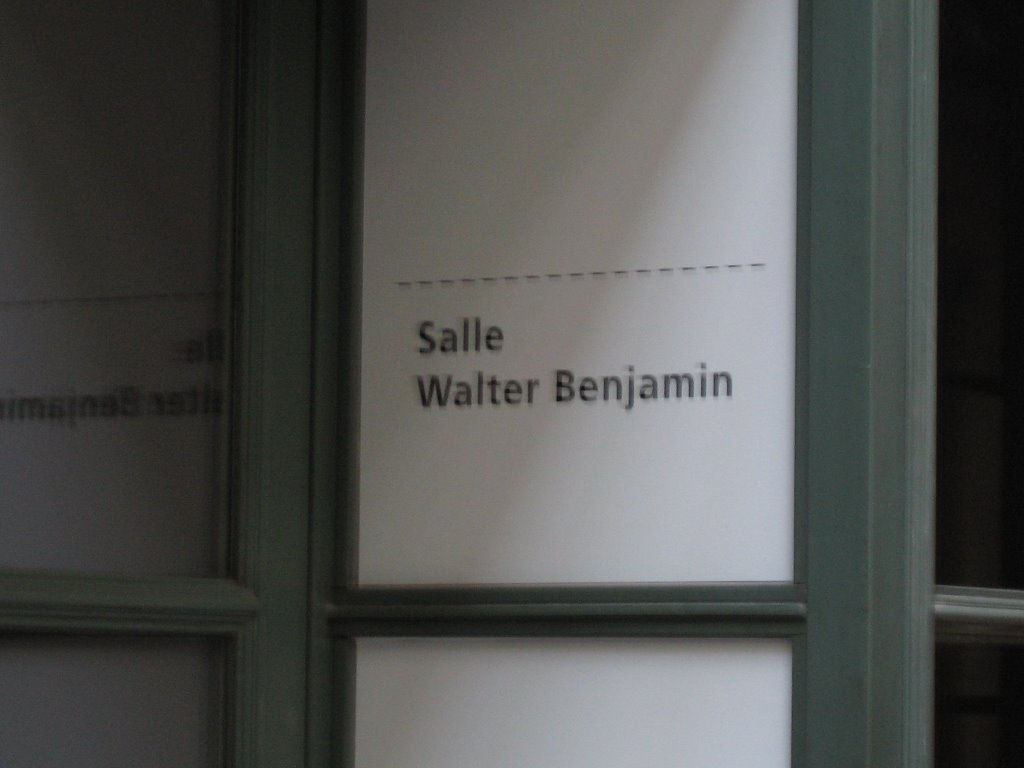
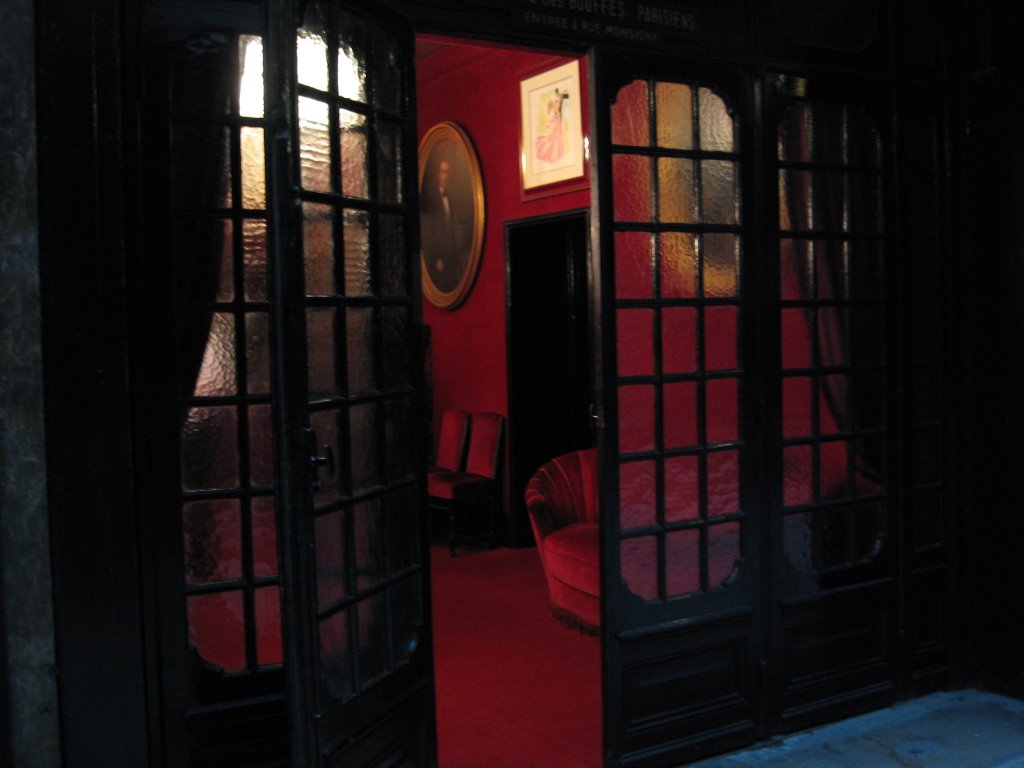
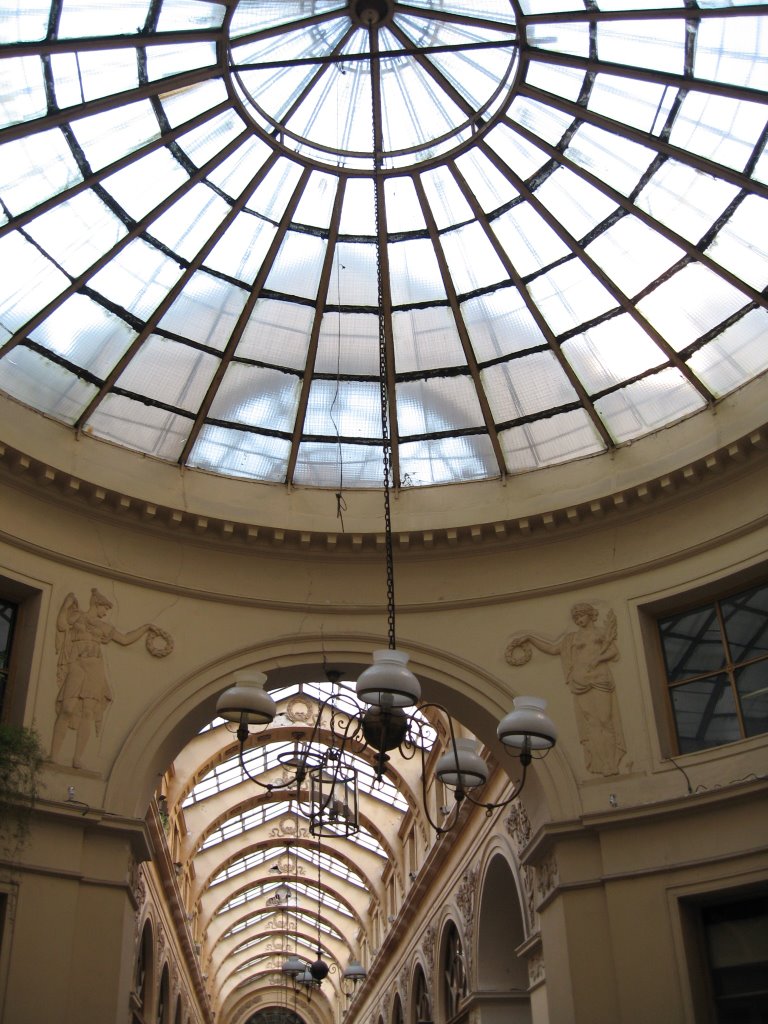
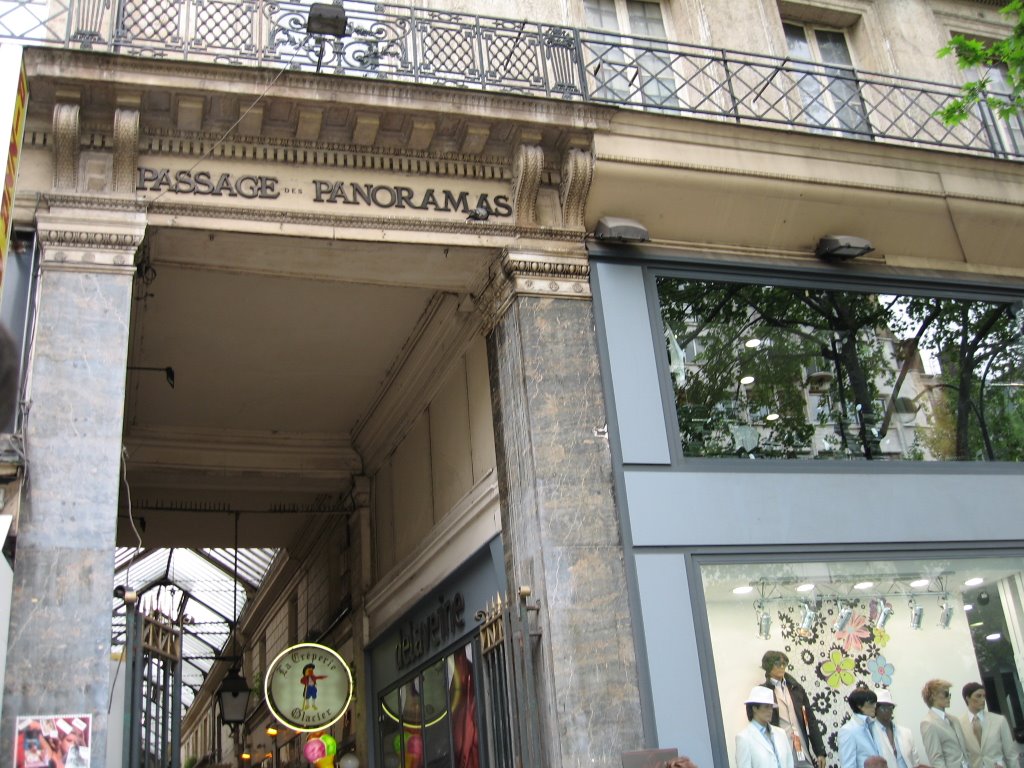
All these pictures of Invader were taken in Paris during May 2007:

Art is not an antidote; it is an invasion.

Off this summer to catch up on my New Yorkers, to read dozens of books, and to attempt to compose a novel.

Maybe later............

Monday, May 07, 2007

sycophant


Cloud portraits over Walnut Creek~

I spent this weekend reading: I can't wait until I can leave for a while.

“Once, when someone asked him about his method of composition, Chekov picked up an ashtray. ‘This is my method of composition,’ he said, ‘Tomorrow I will write a story called ‘The Ashtray’.” –Francine Prose Reading Like a Writer.


“It seems to me that the writer should not try to solve such questions as those of God, pessimism, etc. His business is but to describe those who have been speaking or thinking about God and pessimism, how and under what circumstances. The artist should not be the judge of his characters and their conversations, but only an unbiased observer.” –Anton Chekov

Tuesday, May 01, 2007

punctilious compunctious

Wow! Reading the emotional tumult of my last post simultaneously horrifies and amuses me. Then I realize that I must rise above myself to my true desired intellectual aspirations.

This past week I've been reading a strange collection of essays published in 1921, from a now near-forgotten writer. Reading these essays, I realize how my criticisms of this country have been aired 80 years ago.

“Our morality system has become a mechanical device for protecting us against ourselves; it is the handiwork of terror.”
“More and more our civilization is becoming a not a civilization of free men but of moral cowards.” - Harold Stearns “An Question of Morals” America and the Young Intellectuals

A New Yorker tidbit I ran into:

“Intelligence allied to honesty allied to wit is a powerful charm.” - Adam Gopnick- on Kingsley Amis, New Yorker 4-23-2007

This is a combination I aspire to, along with a dose of deep emotion thrown in. My sympathy always tied to my sardonic humor.


Wednesday, April 25, 2007

personal curiosity cabinet


My birthday was last week and I thought of many things:

1. How memory can be organized like taxonomy or like a curiosity cabinet. Above are pictures of what would be in my personal curiosity cabinet, things which have a value only to me. I have an egg I found while I was a gardener, a bone found on a beach, a pipe-cleaner outlined heart, my cats' whiskers, some stones and pieces of glass, etc. These things evoke a memory, a meaning only accessible to me, yet valueless to the world. I used to think love was like that sometimes.

2. I'm actually quite glad that I will never have to deal with infatuation again. I wanted in life: someone smart and strange, someone who has a big heart, someone I can always trust and rely on, someone who engages my intellect, someone who is my best friend, someone who can share his life with me, someone who is comfortable being themselves with me and is comfortable letting me be myself around them. And I found that person. No matter what happens, or how life turns out, to have such an experience frees me. Even if I spend the rest of my life celibate and single, I will never feel alone.


3. There is a bitterness, though, that I must cure myself of. I felt alot for someone, then I realized that this feeling will never be reciprocated. I realized it was a shame to spend so much of life feeling this one-sided feeling. I never wanted to be a bitter person, yet I find that this bitter taste has not left me. I'm left with the bitter taste for empty feelings. It is useless.

4. About letters-something that used to give a us a window into a writer's mind- now disappeared. Then I thought about love letters. I guess it's better if your ex-lover returns your love letters than to throw it all away. If the loved can no longer feel the emotion expressed in the letter, at least you can remember the passion you felt. There is no ex-lover whose letters I can ever throw away. Those words mean alot to me. But perhaps I am alone this way.
It would be sad not to have slightest trace left. Love is never an easy thing to get over, I want to know that I felt this way once. A letter is the best gift I could ever receive. (he gave so little of himself) (MLG gave so much, more than anyone I've known, more than what I could ever expect).

5. I would like to be happy, for a change.

Thursday, April 19, 2007

Easter Sunday 4-8 wanderings


We wandered down Alcatraz Ave. heading westward into Emeryville. We strolled across the newly landscaped pathways of converted live-work type spaces and passed by new-industrial buildings, housing architectural firms, graphic designs offices and other such artsy-work things.
The landscape we traveled shifted from residences to businesses. We ended at Magic Garden Nursery, which was closed, and we crossed the train tracks to get a view of Aquatic park. And always, we heard the sound of cars in the background.

"The mistake made by all urbanists is to consider the private automobile (and its by-products like the motorcycle) essentially as a means of transportation. Such a misconception is a major expression of a notion of happiness that developed capitalism tends to spread throughout society. The automobile is the centerpiece of this general propaganda, both as sovereign good of an alienated life and as essential product of the capitalist market: This year we hear that American economic prosperity is soon going to depend on the success of the slogan "two cars per family." -Guy Debord Situationist Thesis on Traffic

Sunday, April 15, 2007

word spills

Sometimes,

I wish to never speak again, let all the wasted conversations dissolve into dissipated air.

I wish to gain enough distance between me and my past that I can only view it with a dispassionate calm.

I wish to spend my Sundays reading the New Yorker.

I wish not to feel so disturbed while reading Fitzgerald's biography.

I wish I could remember the things about you that made me feel so happy and to not forget the things about you that made me feel so sad.

I wish that my mind was lucid and precise, and that thinking was as easy as breathing.

I wish I could get enough sleep.

I wish I could remember all the words I really like and I wish I could use those words in perfectly formed sentences.

~instead of spilling words...

Thumper

Friday, April 13, 2007

moveable


RE: the painter, Pascin "He looked more like a Broadway character than the lovely painter that he was and afterwards, when he had hanged himself, I liked to remember him as he was that at that night at the Dôme. They say the seeds of what we will do are in all of us, but it always seemed to me that in those who makes jokes in life the seeds are covered with better soil and with a higher grade of manure." -Ernest Hemingway A Moveable Feast


RE: F. Scott Fitzgerald "He had...a delicate long-lipped Irish mouth that, on a girl, would have been a mouth of a beauty. [...] The mouth worried you until you knew him then it worried you more." -Ernest Hemingway A Moveable Feast

Friday, April 06, 2007

my good-riddance friday

some thoughts during the week:

A pessimist is a man who thinks all women are bad. An optimist is one who hopes they are.
--Chauncey Depew


"…the test of a first-rate intelligence is the ability to hold two opposed ideas in the mind at the same time, and still retain the ability to function."
- F. Scott Fitzgerald The Crack Up

"…I only wanted absolute quiet to think out why I had developed a sad attitude toward sadness, a melancholy attitude toward melancholy, and a tragic attitude toward tragedy- why I had become identified with the objects of my horror or compassion.
- F. Scott Fitzgerald Pasting it Together


Globe-trotting bartender, what a life!


An article I read last night, how we really fucked up in Iraq and still are fucking up, too bad.

http://www.newyorker.com/reporting/2007/03/26/070326fa_fact_packer/

Wednesday, April 04, 2007

another 4/4 goes by

a song that has been floating in my head-


you threaten to make me dead
and none of this will matter
or surface again

scares you to know that we won't bewatching the same sun
or brooding the same thoughts
in the same part of the world

scares me how you get older
how you forget about each other

things mean a lot at the time
don't mean nothing later

-Red House Painters

Sunday, April 01, 2007

anchoress

10. Time is a tyranny to be abolished.
-From the twelve propositions of transition magazine, Paris 1927-1938


"This being in love is great-you get a lot of compliments and begin to think you're a great guy."
-F. Scott Fitzgerald from Notebooks (The Crack-Up)

"When you get over an infatuation, to fall for someone ever again seems so inconceivable that you imagine no one, not even a bug, that is not mired in disappointment."
-E.M. Cioran Lure of Disillusion

Sunday, March 18, 2007

floruit


"We, amnesiacs all, condemned to live in an eternally fleeting present, have created the most elaborate of human constructions, memory, to buffer ourselves against the intolerable knowledge of the irreversible passage of time and the irretrievability of its moments and events." attributed to Geoffrey Sonnabend from Mr. Wilson's Cabinet of Wonder- Lawrence Wescher

Some random brainthought bubbles floating around in my head the last month or so:

Individualism has been sold to the Americans, like cheap, overpackaged plastic toys.

I hate the sound that my teeth make when they hit the edge of my glass when I drink.

There exists a restaurant jazz which splays into enough spazzy chaos to inspire spirited conversation amongst diners and servers, yet slides into a smoothness to allow pause for thoughtful tasting.

Wednesday, February 14, 2007

spleen and ideal


~Does all romance end in tragedy, eventually?

~How can one withdraw from society without offending anyone?

~In sleep we are free...
Monday, February 12, 2007

Novel ideas

"Every novel created with real passion aspires quite naturally to a lasting aesthetic value, meaning to a value capable of surviving its author. To write without having that ambition is cynicism: a mediocre plumber may be useful to people, but a mediocre novelist who consciously produced books that are ephemeral, commonplace, conventional -- thus non-useful, thus burdensome, thus noxious -- is contemptible. This is the novelist's curse: his honesty is bound to the vile stake of his megalomania."

Milan Kundera

Wednesday, February 07, 2007

blocking

This week has been filled with disappointments, irritations and snot.


"In 1947, Partisan Review printed an essay, “Writers and Madness,” by one of its editors, William Barrett, claiming that the modern writer was by definition an “estranged neurotic,” because the difficulty of being authentic in a false-faced world forced him to go deeper and deeper into the unconscious, thus pushing him toward madness: “The game is to go as close as possible without crossing over.” Many did cross over, he added darkly.

Not everyone agreed that writers were mental cases, but a number of psychoanalysts did, and their loudest spokesman was Edmund Bergler, a Viennese émigré who in the forties and fifties put forth what is probably the most confident theory of writer’s block ever advanced. First of all, he coined the term. (Formerly, people had spoken of “creative inhibition” or the like.) Second, he proclaimed its cause: oral masochism, entrapment in rage over the milk-denying pre-Oedipal mother. Starved before, the writer chose to become starved again—that is, blocked. Bergler claimed to have treated more than forty writers, with a hundred-per-cent success rate. That didn’t mean that the writers became like other people. “I have never seen a ‘normal’ writer,” Bergler reported. Even if their work was going well, this was often “entirely surrounded by neuroticism in private life”—squalid love affairs, homosexuality, etc. They had recompense, however: “the megalomaniac pleasure of creation . . . produces a type of elation which cannot be compared with that experienced by other mortals” (italics his)."

-JOAN ACOCELLA
New Yorker Issue of 2004-06-14 and 21

Thursday, February 01, 2007

Gaston Bachelard

"Ideas are invented only as correctives to the past. Through repeated rectification of this kind one may hope to disengage an idea that is valid."

Tuesday, January 30, 2007

Saint-Expuréry

"To love is not to look at one another but to look together in the same direction."

Friday, January 26, 2007

Pamuk

"I am now going to speak of the meaning of that weight: that weight is what a person creates when he shuts himself up in a room and sits down at a table or retires to a corner to express his thoughts—that is, the weight of literature."


~ORHAN PAMUK New Yorker Issue of 2006-12-25 and 2007-01-01


I haven't had much to say here~

However, I've been trying to catalogue some of my dreams here- at this blog- which I will try to post to, once or twice a week.
http://blog.myspace.com/epithymy

Next week- some discussion of books read, including Sylvia Beach.

Tuesday, January 23, 2007

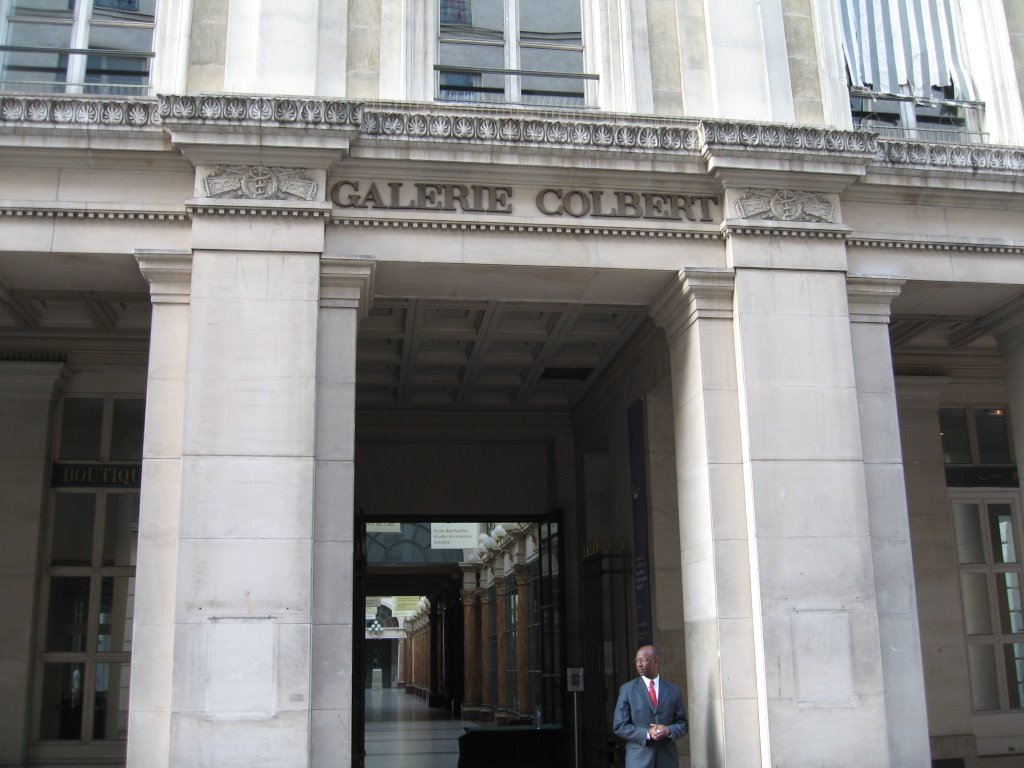
colbert


The Arcades Project Walter Benjamin

Phantasmagoria is the intentional correlate of immediate experience. M3a, 4

Experience is the outcome of work; immediate experience is the phantasmagoria of the idler. M1a,3


If you would like more pictures of passages: http://www.santm.com/gallery2/main.php?g2_itemId=7380&g2_page=2

and more: http://www.parisbestlodge.com/passages.html

and a little more:
http://paris.contexttravel.com/static/passages.php?sess=ct&PHPSESSID=15a34471cda15533ae8fda95efd

Friday, January 19, 2007

choiseul


The Arcades Project Walter Benjamin


Boredom began to be experienced in epidemic proportions during the 1840's. Lamartine is said to be the first to have given expression to the malady. It plays a role in a little story about the famous comic Deburau. A distinguished Paris neurologist was consulted one day by a patient whom he had not seen before. The patient complained of the typical illness of the times: weariness of life, deep depressions, boredom. "There's nothing wrong with you," said the doctor after a thorough examination. "Just try to relax-find something to entertain you. Go see Deburau some evening and life will look different to you." "Ah, dear sir," answered the patient, "I am Dedrau." D3a, 4

Thursday, January 18, 2007

vivienne


The Arcades Project Walter Benjamin

The father of Surrealism was Dada; its mother was an arcade. Dada, when the two first met, was already old. At the end of 1919, Aragon and Breton, out of antipathy to Montparnasse and Montmarte, transferred the site of their meeting with friends to a café in the Passage de l'Opéra. Construction of the Boulevard Haussman brought about the demise of the Passage de l'Opéra. Louis Aragon devoted 135 pages to this arcade; in the sum of three digits rides the number nine- the number of muses who bestowed their gifts on the newborn Surrealism. C1, 3

Wednesday, January 17, 2007

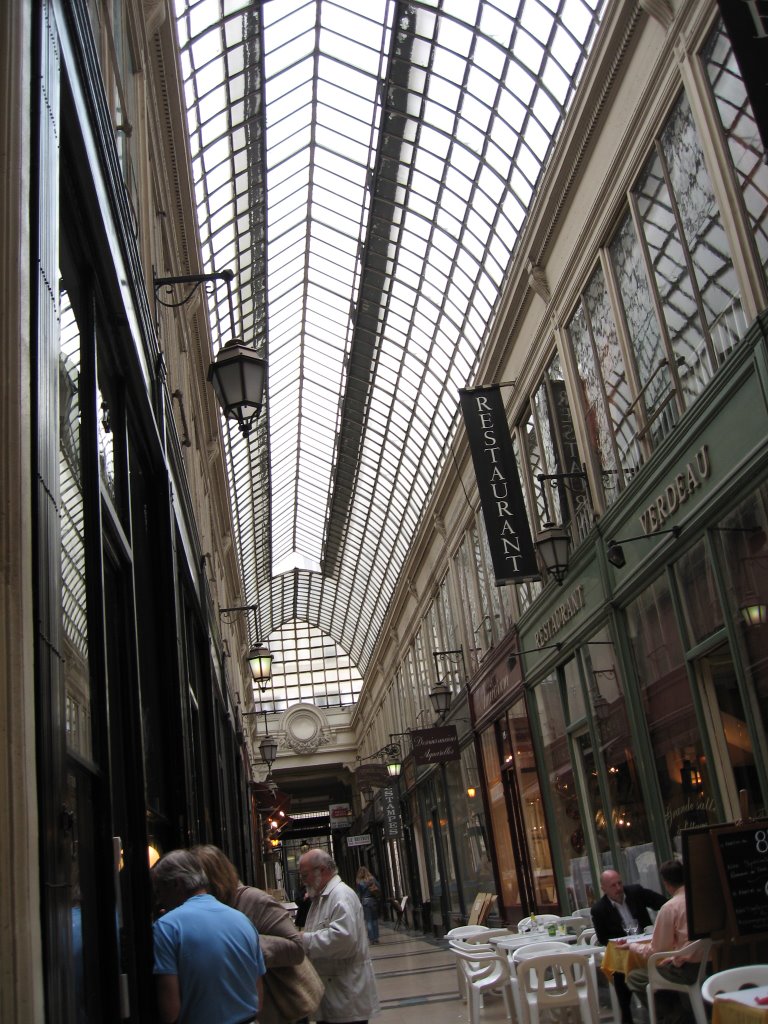
verdeau


The Arcades Project Walter Benjamin

Arcades are houses or passages having no outside-like the dream. L1a, 1

The street conducts the flâneur into a vanished time. For him, every street is precipitous. It leads downward--if not to the mythical mothers, then into a past that can be all the more spellbinding because it is not his own, not private. Nevertheless, it always remains the time of a childhood. But why that of the life he has lived? In the asphalt over which he passes, his steps awaken a surprising resonance. The gaslight that streams down on the paving stones throws an equivocal light on this double ground. M1, 2

Tuesday, January 16, 2007

panoramas


From The Arcades Project Walter Benjamin

The interest if the panorama is in seeing the true city- the city indoors. What stands within the windowless house is the true. Morever, the arcade, too, is a windowless house. The windows that look down on it are like loges from which one gazes into its interior, but one cannot see out these windows to anything outside. (what is true has no windows; nowhere does the true look out to the universe.) Q2a, 7

Friday, January 12, 2007

incarnadine


My internal question for today: Do assassins get issued 1099's?

I like W. He would be someone I would go to dinner with and get into a lot of debates about literature and writing. Or maybe I should just shut up and listen to him. I don't know if he is real or made up. I have imagined a few "friends" in my life, I have notebooks filled with the fragmented details of their lives. I wonder if I imagined a lover if I would also have to imagine our fights. Because it would be wholly unrealistic for me to be in a romantic relationship with someone without having fights, or least have debates; it would be completely uncharacterstic of me for this not to happen. Let's just say I have an incarnadine temper.

Wednesday, January 10, 2007

discordant


My internal question for today: Should I write a novel just for the hell of it? But what genre? Maybe I'll write a character-driven, faux-memoir in witty, discordant aphorisms with concurrent timelines as an extended metaphor for cladistic taximetrics. Or maybe I should write a "how to" book: "How to Avoid Marriage".

Why, do you ask, would I write a novel, since I do not care about publishing it nor do I care if anyone reads it? Well, I read this interview with author, Caitlin Kiernan, and I came across this line about her writing experience: "It was like having to spend every day sitting in front of a mirror, vivisecting my own brain." I thought to myself, "Hell, I do that everyday. If I wrote a novel, at least I would feel as though I had something to show for it." It would be parallel to getting a B.A. degreee for all the hours of sitting in a classroom letting someone dictate about what is worth knowing.

Monday, January 08, 2007

Ingurgitate


My mind restlessly ingurgitates library books faster than I can check them out.

My internal question for today: Why is it when one is described as prolific, it is considered a good thing?


Perhaps the secret of great writers is a love which flings opens the doors to let thoughts and feelings rush in.

http://www.powells.com/review/2007_01_08

Sunday, December 31, 2006

books read for 2006

Some people post their favourite music or movies for the year. I can only post the books I've read from 1/1/2006-12/31/2006, cover to cover. Next year, I hope to be a nicer person to have read ten more books than this year. ~Tschüs

* = a friend made me read it
# = a writer or about writer who has committed suicide
(that I know)

1. Across the Acheron -Monique Wittig

2. The Math Gene -Keith Devlin

3. Isabelle: the Life of Isabelle Eberhardt -Annette Kobak

4. A Chance Meeting -Rachel Cohen

5. The Immense Journey -Loren Eiseley

6. The Dispossessed -Ursula LeGuin

7. The Death and Death of Great American Cities -Jane Jacobs

8. What am I Doing Here? -Bruce Chatwin

9. Ludwig Wittgenstein: A memoir -Norman Malcom

10. Madame Bovary -Gustave Flaubert (trans. Paul de Man)

11.Three Women (Alma Mahler-Werfel, Gertrude Stein, Lous Andres-Salome) -Walter Sorell

12. The Road to Santiago -Kathryn Harrison

13. Fin de Siècle Vienna -Carl Schorske

14. Gathering Moss: A Natrual & Cultural History of Mosses -Robin Wall Kimmerer

15. # Moscow Diary -Walter Benjamin

16. # The Disinherited: The Life of Gérard de Nerval -Benn Sowerby

17. The Urban Ideal: conversations with Paolo Soleri

18. City Life: Urban Expectation in a New World -Witold Rybczynski

19. *Passage -Connie Willis

20. Color: A Natural History of the Palette -Victoria Finlay

21. The Flâneur -Edmund White

22. # The World of Yesterday -Stefan Zweig

23. Sade my Neighbor -Pierre Klossowski

24. California Forests and Woodlands: A Natural History -Verra R. Johnston

25. Oakland: A History -G.A. Cummings & E.S. Pladwell

26. Waiting for Godot -Samuel Beckett

27. # Insatiability -Stanislaw I. Witkiewicz

28. My Lives -Edmund White

29. *Bellwether -Connie Willis

30. Stiff: The Curious Lives of Human Cadavers -Mary Roach

31. Nausea -Jean-Paul Sartre

32. Tête –à Tête -Hazel Rowley

33. # Shadows of the Sun: The Diaries of Harry Crosby ed. Edward Germain

34. Exquisite Corpse: Surrealism and the Black Dahlia Murder -Mark Nelson & Sarah Bayliss

35. # Freud's Vienna and other Essays -Bruno Bettelheim

36. # The Painted Bird -Jerzy Kosinski

37. Blue Angel -Francine Prose

38. Faust & Yakov Pasynkov -Ivan Turgenev

39. The Portrait of Mr. W.H. -Oscar Wilde

40. Justine -Lawrence Durrell

41. The Great Gatsby -F. Scott Fitzgerald

42. The Modern Mind: An Intellectual History of the 20th Century -Peter Watson

43. Blue of Noon -Georges Bataille

44. Shakespeare and Company -Sylvia Beach

45. #A Room of One's Own -Virginia Woolf

46. The Great Pianists -Harold Schonberg

47. Curious Naturalists -Niko Tinbergen

Tuesday, December 26, 2006

ataraxy

Quick notes on feelings:

The past has past. I can't complain, nor would I want to. I drank three pots of pu-erh on Christmas Eve. and read the biography of Weldon Kees. I felt calm; this is the way I hope always get to spend my free time: books and tea (or an amaretto sour). I sincerely hope that all those who I have loved are loved now. I wish them all moments of joy.

A quick link of an article on Weldon Kees-
http://www.newyorker.com/critics/atlarge/articles/050704crat_atlarge?050704crat_atlarge

kisses~

more LA scenes


Friday, December 22, 2006

LA scenes


Thursday, December 14, 2006

esurient


"The great naturalist, Fritz Müller- who was the first to describe the scent scales- mentions how, on his journeys in Brazil, he often carried a Paplio Grayi with him, just for the purpose of sniffing its scent when the mood took him." - Niko Tinbergen Curious Naturalists


"Ulysses, like everything else of Joyce's, was written entirely by hand. He used blunt black pencils- he found the ones he wanted at Smith's in Paris-and pencils of different colors to distinguish the parts he was working on. Fountain pens he didn't understand at all. They bewildered him. Once I found him struggling to fill one, covering himself with ink as he did so. Sylvia Beach Shakespeare and Company


Quicknotes on the books I finished reading this week:

The Great Gatsby, by F. Scott Fitzgerald. I read it before when I was young. Now after reading it again, I am convinced I should read it at least once every other year. As I was reading, I would come across an amazing line that I would want to write down, but I just couldn't stop reading. Nothing I have read exposes the farce of the American dream as well as this novel. Material desires hiding the gaping emptiness of a life not examined.
I finished up the novel while I was at Bourbon & Branch in SF, a faux speakeasy-era bar with expensive, but good-looking cocktails; I had two. A few things I learned: Fitzgerald was an alcoholic, but he never wrote drunk, he was an amazingly sober writer and it shows in his prose. He was born in Minnesota; a Mid-Westerner transplanted to the East Coast; like Gatsby. And like Gatsby, Fitzgerald fell in love with a socialite (Zelda) who rebuffed his initial marriage proposal. He wrote his first novel, which became a success, he made some money, and he got to marry the girl; who ended up going insane and was confined to a mental institution. Nothing like love to drive you mad.

Speaking of mad, I also read The Blue of Noon, by Georges Bataille. Talk about a crazy novel, leave to Georges to leave me with my mouth open, thinking, "I can't believe someone wrote that." My head spun reading this novel of drunkenness and despair; written in 1935, all around, Europe falls into pieces and the characters lose themselves in grotesque debauchery and perversity.

I also read The Modern Mind, by Peter Watson. A dash into the great-breaking ideas that affected and transformed the 19th-20th Centuries. There's some decent reviews of the book here. I agree with most of it. It is a good book to get started on developing a foundation of historical understanding for the last 100+ years. Watson's analyses on novels were succinct and inspired, so much that I added another half dozen to read, plus I read The Great Gatsby again. I developed a mini-crush on this Watson fellow, even though he's older than my father. I imagined all the books he must have read, all the mental calculations it took to connect it together in this massive book; and it fulfilled my esurient need for understanding how the parts fit together. It could have plodded along, but Watson uses his journalistic skill to keep it an engaging read.
Wednesday, December 13, 2006

Blue


"My life was following an increasingly crooked path. I used to go to various places for drinks, walk around aimlessly, and finally take a taxi home. It was then, in the depths of the taxi that I could think of Dirty and burst out sobbing. I no longer even felt any pain, or the least anxiety; inside my head, I was aware of nothing but absolute stupidity. It was like a state of perpetual childishness. I was shocked by the madness enacted by my wild state of mind whenever I wanted to tempt fate, and I recalled the irony and courage I had shown; and, of all that, the one thing left was the feeling that I was some kind of idiot, extremely touching perhaps, but in any care ludicrous. " Georges Bataille Blue of Noon

Monday, December 11, 2006

pictures this weekend


Friday, December 08, 2006

Treehouses in Turkey


Cioran's grave at Cimetière du Montparnasse, Paris
Originally uploaded by veti_vert.

Cioran's grave at Cimetière du Montparnasse, Paris

Since I'm being personal-
Thoughts which come to my head when it is 2AM and I am faced with a second night of sleeplessness:


I often wonder if romantic love is a folie à deux, a sort of socially-sanctioned lunacy; and I want out of the madhouse. I wonder if sex and love collide into a dangerous cocktail of delusion; a sly toxin intoxicating the imbiber with destructive dreams. Romance is one bland illusion, slated to disappoint every time.

If some moony-eyed moron ever comes running towards me babbling such love-laced obscenities, I 'm going to punch him square between the eyes to clear his head. "Proselytize elsewhere," I will scoff, "I'm an ex-convert of your crap religion."

Maybe it's just me. After all, I have sought out these very captivating jailors, only to resent the trap I help them create to confine me. A part of me (a large part) feels that I would prefer to run off to some remote city in Iceland and spend the rest of my life reading books, never to speak to anyone I know, ever again (or maybe a tree house in Turkey- if there are still trees in Turkey).

I love my current boyfriend, I really do. I think he's the kindest, most charming person I know. And, despite my seemingly grouchy demeanor, I do believe in love and relationships. I believe in the kind where people genuinely like to talk to each other and like each other's company. I believe in someone who will stroke your hair when you are saddened by the world, and who will give you kisses on the head before you go to sleep.
I do not believe in the tumultuous, storm-saturation that masquerades as some sort of emotional connection. I will never allow myself to fall into that silliness ever again.

Then again, maybe I just need more sleep.
Wednesday, December 06, 2006

Under capitalism, man exploits man. Under communism, it's just the opposite


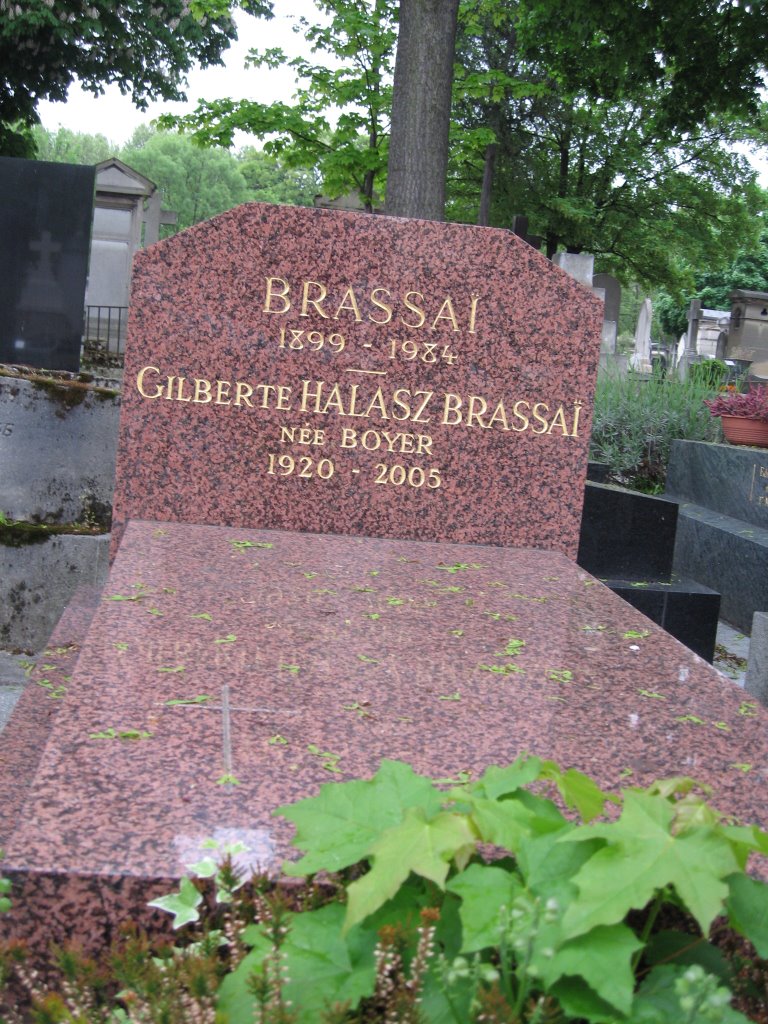
Brassaï's grave in Cimetière du Montparnasse, Paris


While I was looking up some info about J.K. Galbraith, I ran into these capitalist/communist jokes. Galbraith is credited with this quip, but actually, he only reported it in his memoirs. I like this version of the abovementioned joke because it reminds me of a man I met while I was in Moscow in 2005.


Q: Is there a difference between capitalism and communism?
A: In principle, yes. In capitalism, man exploits man. In communism, it's the reverse.


I thought it was a quirk that he began many of his sentences with, "In principal…." But now I understand there may have been a precedent for it. See below for other jokes and quotes!

Personally, the last week had been spent with having a bloody nose a day, and having very negative feelings about a past relationship (CC). When I remember certain events which happened in this relationship, I am filled with disappointment of how things never turned out, and disgust with myself for letting myself be treated with such blatant disrespect and inconsideration. But in the end I realize, people are as they are. You cannot expect or demand love from anyone. If they chose to give it to you, then it is a gift. If you give love to someone who does not recognize the value of it, you cannot take it personally. This love has no value to them, and there is nothing that you can do to change that. You should not let their attitude devalue you. I had let myself be devalued for too long, and it upsets me.

But then I had this dream last night. I think it was brain telling me why I allowed myself to be in this situation. It was a reminder of what I liked about this person. Where the relationship was despairing most of the time; the friendship was really valuable to me. I don't know why we didn't just stay friends and not cross into that relationship line; that was our worst mistake.

The dream:

There is a performance in a warehouse with CC and some other people. I am undecided in attending because I don't want to see CC, however, another person who is performing asks me to come up, so I do. I expect that CC will give me the cold, indifferent treatment, as he often does, so I stand in an out of the way place. To my surprise, he comes to me and gives me a hug. We have a little awkward conversation. The performance happens- then I am about to leave. CC offers to walk with me. We walk around the city, looking a various things. One thing is a series of transport devices which allows a person to turn a crank and a plank moves in a spiral way to allow the person to travel great distances with little effort. Sometimes we are in a car. We talk and walk around in a very friendly fashion, overall I feel happy about this. The dream then moves onto something else, which I don't remember.

When I woke up, I felt better about the situation. I doubt this friendly interaction will ever happen between us, but I guess the memory of how we used to be friends makes me feel a little better.


Now some levity:


We pretend to work and they pretend to pay us,

Under Communism speech is strictly regulated, so opinion goes unheard.Under Capitalism speech is totally free, so opinion goes unheard.


Q: Is it true that the poet Vladimir Mayakovsky committed suicide?
A: Yes, it is true, and even the record of his very last words is preserved: "Don't shoot, comrades."

Q: Is it true that Tchaikovsky was homosexual?
A: Yes, but we love him not only for this.

Monday, December 04, 2006

Cabinet particulier


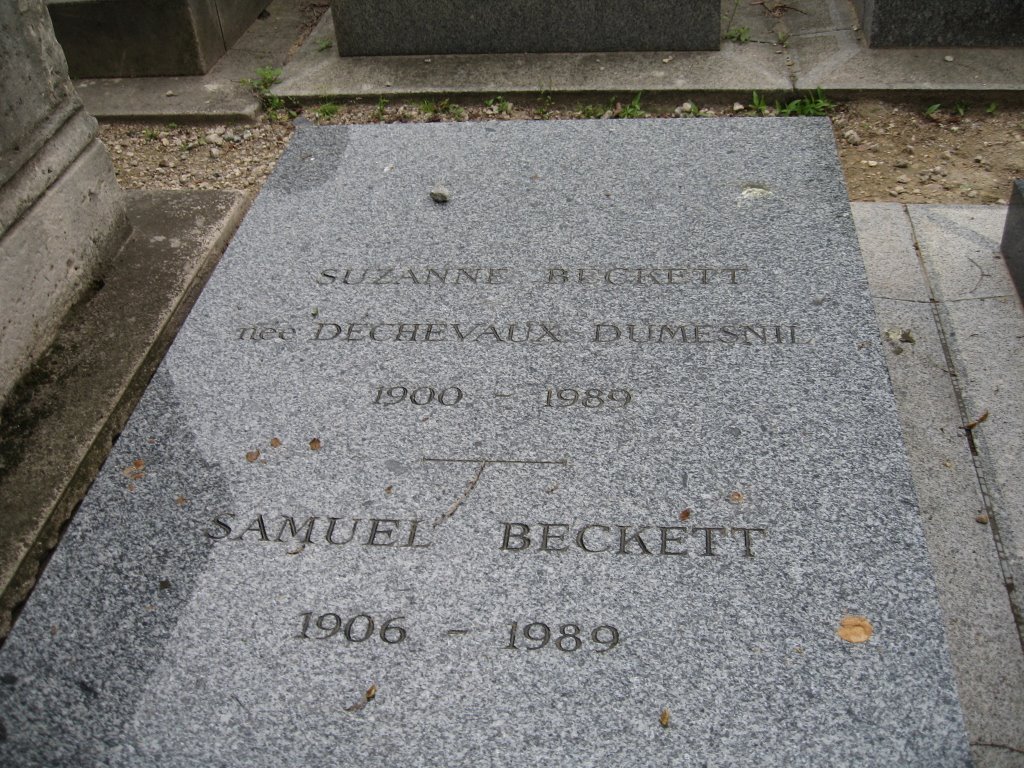
Samuel Beckett's grave in Cimetière du Montparnasse, Paris- May 2006


"Under modernity there can be no question about the moral authority of the self. The only question is that of how the self is to be fulfilled-by hedonism, by acquisitiveness, by faith, by the privatisation of morality or by sensationalism." -Daniel Bell (from Peter Watson's The Modern Mind)


A decent review of the book, Casanova's Women, a rather titillating read for a Monday-

http://www.salon.com/books/review/2006/12/02/summers/index.html

Friday, December 01, 2006

modernist novels


Downtown Oakland


"Far off events, transformed by memory, acquire a burnished brilliance because they are seen in isolation, divorced from the details of before and after, the fibres and wrappings of time. The actors, too, suffer a transformation; they sink slowly deeper and deeper into the ocean of memory like weighted bodies, finding at every level a new assessment, a new evaluation in the human heart." Lawrence Durrell Justine

I finished reading this last night. Another classic which embodies the characterists of the modernist novel. A good review here. And if you want to read a 30 page interview with Durrell to learn about his roving life in between the world wars- go here.

And if you want to understand the modernist novel- here's a handy little comparison I found.